Since 2021, applications per hire have tripled. Most positions receive an average of more than 300 applicants each, according to May 2025 research from recruiting platform Ashby. On LinkedIn, by the time a candidate receives an email saying they may be a fit for a role, applications are often already closed. The window is that narrow.
High schools cannot solve this problem, but we have a real duty to do what we can to make an impact. This work matters for all students, even those on track to attend college. Because 62 to 70 percent of college students work while enrolled. And the old fallback of grabbing a shift at McDonald’s is far less viable than it used to be. The labor market has changed, and our work with students has to change with it.
So, what do we actually do?
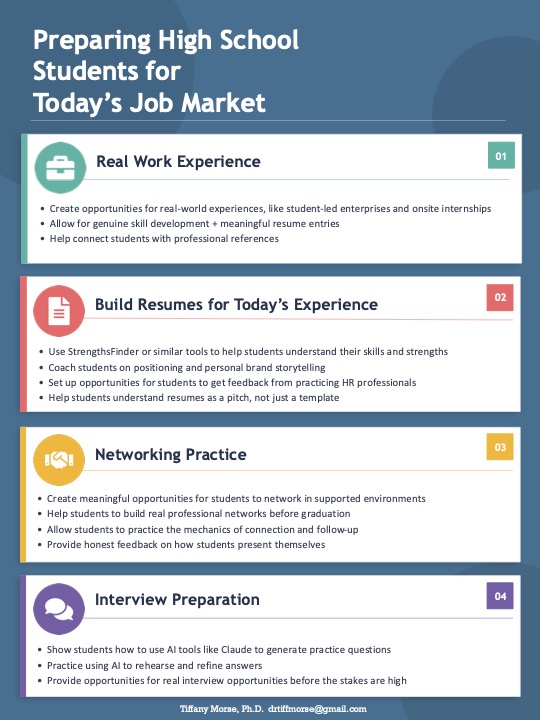
1. Provide real work experience, with real stakes. On-site internships, Student Led Enterprise programs like those supported by NewCo (where students make actual products, interact with businesses, and run their own companies, many of them paid), and models like CHIP (Classroom Hosted Industry Partnerships) all point in the right direction. What matters most is that students develop genuine, demonstrable skills and have something meaningful on their resume when they leave, including professional references who can speak to their work ethic and not just their attendance.
2. Resume work that is actually useful. Not the kind where students fill out a template and call it done. Students need tools to understand their own strengths (StrengthsFinder and similar assessments are a good starting point), and then real coaching on how to position those strengths as a pitch for their personal brand. Critically, the feedback has to come from HR professionals and hiring managers, not from well-intentioned staff who last applied for a job a decade ago.
3. Real practice networking. Programs like Entrée to Employment exist for a reason. Students need structured opportunities to build their networks and practice the actual mechanics of professional connection, and to get honest feedback on how they come across. This is a skill, and it has to be practiced like one.
4. Interview preparation that treats the interview like a real event. Students should know how to use tools like Claude to generate practice questions tailored to a role, how to use audio playback to hear themselves and iterate until their answers are clear and confident, and ideally, have completed at least one real interview before it counts. Whether that is for an internship slot, a spot in a networking event, or something else, the format matters less than the principle: if a student is lucky enough to land a job interview against 300 other applicants, it should not be the first time they have ever sat across from someone and been asked hard questions.
The stakes have never been higher. Time is short. Our students are ready. Are we?
 Dr. Tiffany Morse
Leave a comment